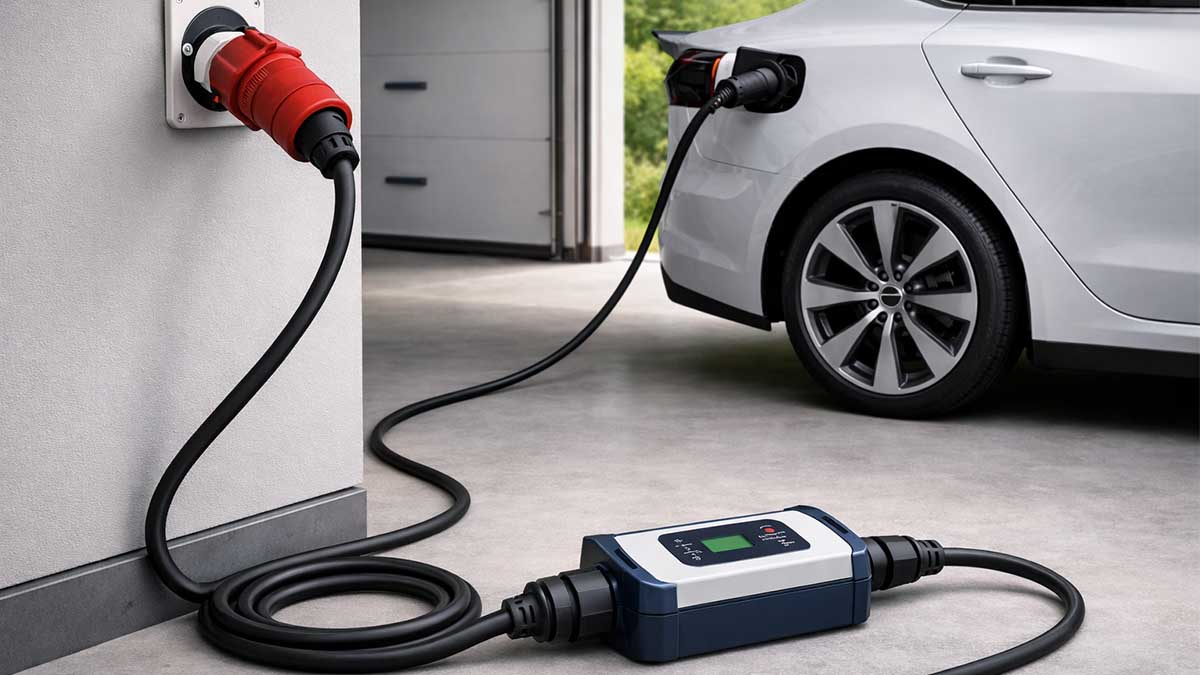
 CEE (IEC 60309) Красный 3-фазный 16А против 32А для портативной зарядки электромобилей
Jan 14, 2026
Красная розетка IEC 60309 часто означает наличие доступа к трехфазному переменному току. Это полезно, но не гарантирует безопасную ночную стоянку электромобиля. Результат зависит от трех факторов: состояния контактов розетки, номинала цепи (16 А или 32 А) и тока, установленного при первом запуске.
Если вы не можете подтвердить номинал автоматического выключателя, считайте его рассчитанным на 16 А и начните с низкого значения. Вы всегда можете увеличить номинал после того, как вилка остынет.
Что нужно проверить перед подключением
Начните с основных вещей, которые вы можете проверить на месте.
Количество пинов
Красный стандарт IEC 60309 обычно обозначается следующим образом:
·5-контактный (3P+N+PE): три фазы, нейтраль, заземление
·4-контактный (3P+PE): три фазы, заземление, без нейтрали
Многие портативные зарядные устройства для электромобилей построены на основе 5-контактных разъемов. Если ваш адаптер или портативное зарядное устройство рассчитаны на нейтральный провод, а розетка его не обеспечивает, прекратите использование. Не пытайтесь подогнать провод под нейтральный.
номинальные параметры цепи
Найдите маркировку на крышке розетки, распределительном щите или в таблице автоматических выключателей. Вам нужна четкая маркировка на 16 А или 32 А. Одного цвета недостаточно.
Посадка и износ гнезда
Это важнее, чем кажется. Если вилка может свободно болтаться в розетке, значит, контактное давление слабое. Слабое контактное давление приводит к перегреву во время длительного использования.
Как отличить 16A от 32A, если отсутствуют маркировки.
Если на крышке розетки нет маркировки или этикетка нечитаема, выполните следующие проверки. Прекратите проверку, если что-то кажется не так или не соответствует вашему оборудованию.
·Обратите внимание на маркировку, нанесенную методом литья, на корпусе розетки или вилки. На многих устройствах, соответствующих стандарту IEC 60309, указаны номинальный ток (16 А или 32 А), напряжение (часто 400 В) и положение часов, например, 6h.
·Проверьте размер и совместимость. Вилка на 32 А физически больше и обычно не вставляется в розетку на 16 А. Если она начинает входить, а затем заедает, остановитесь. Принудительное вставление может повредить контакты и повысить вероятность перегрева.
·Проверьте схему расположения контактов. Не смешивайте 4-контактные и 5-контактные компоненты. Если ваш адаптер или зарядное устройство рассчитаны на 5 контактов, а у вас есть только 4-контактные, это неприемлемо.
·Если вы по-прежнему не можете подтвердить номинальный ток, начните с низкого значения (например, если это 16 А) и вызовите квалифицированного электрика для проверки цепи перед длительными сеансами работы.
О положении контактной площадки: В стандарте IEC 60309 для обозначения положения заземляющего контакта используется тактовая система. Для многих трехфазных источников питания обычно используется положение 6h, но для других напряжений и частот могут использоваться другие положения. Рассматривайте маркировку на самом разъеме/вилке как единственный надежный ориентир.
16А против 32А: какие изменения происходят в реальных условиях эксплуатации?
Цепь на 32 А обеспечивает больший запас мощности. Этот запас мощности обусловлен не только большей максимальной мощностью. Он также означает, что можно пропускать умеренный ток с меньшей нагрузкой на контакты.
Используйте это в качестве практического ориентира. Указанная мощность — это потенциальная мощность зарядки. Реальная мощность зарядки может быть ниже, поскольку бортовое зарядное устройство автомобиля (OBC) может ограничивать подачу энергии. Эти данные рассчитаны на типичное трехфазное напряжение 400 В и зарядное устройство для электромобилей, способное использовать все три фазы.
Краткое сравнение 16А и 32А
Потенциальная мощность зарядки не совпадает с реальной мощностью зарядки. Встроенное зарядное устройство вашего автомобиля может ограничивать подачу переменного тока.
Элемент
IEC 60309 Красный 16А (3-фазный)
IEC 60309 Красный 32А (3-фазный)
Типичное напряжение питания (400 В, 3 фазы)
~11 кВт
~22 кВт
Типичный предел в реальных условиях
Состояние розетки, распределенные нагрузки, бортовой компьютер автомобиля.
Бортовой компьютер автомобиля, правила загрузки площадки
Хорошие условия для первого запуска.
8А, затем 10-13А, если холодно.
16А, затем 20-24А, если холодно
Как выглядит избыток
Вилка быстро нагревается; неплотно прилегает; имеет запах.
Всё ещё возможно, обычно проявляется позже.
Два простых напоминания о реальности:
·Если мощность вашего автомобиля ограничена 11 кВт, то розетка на 32 А это не изменит.
·Если розетка старая или расшатана, даже 16 А может оказаться слишком агрессивным током для длительного сеанса работы.
Способ первой зарядки, позволяющий избежать распространенных ошибок.
Это самый простой подход, который работает на сайтах разного типа.
Установите консервативный режим работы.
Для розетки на 16 А: начните с 8 А. Для розетки на 32 А: начните с 16 А. Если вы не знаете номинал цепи, начните с 16 А.
Бегайте 10-15 минут
Затем остановитесь и проверьте лицевую сторону вилки и первые 30 см кабеля.
Проверьте температуру полезным способом
Если один участок заметно горячее остальных, предположите наличие контактного сопротивления и меньший ток. Если поверхность вилки быстро нагревается, не проверяйте её. Остановитесь и понизьте напряжение. Если почувствуете запах горячего пластика, остановитесь.
Начинайте с небольших шагов.
Если температура остается лишь умеренно теплой, увеличьте на один шаг и проверьте еще раз через 10-15 минут. При длительных сеансах повторите проверку примерно через час.
Минимальные требования безопасности
Используйте только правильно установленные и заземленные розетки и распределительное оборудование. Если вы не можете подтвердить качество установки или наличие защиты вышестоящего устройства, это должно стать поводом для приостановки работы и проверки цепи электриком.
·Избегайте самодельных или многокомпонентных адаптеров. Используйте только компоненты, соответствующие номинальным параметрам конкретного типа вилки.
·Если в цепи имеется защитное устройство, которое срабатывает неоднократно, не следует постоянно его сбрасывать. Уменьшите ток или остановитесь и устраните причину неисправности.
·Любой запах, изменение цвета или быстрый нагрев поверхности свечи зажигания являются сигналом к остановке, а не возможностью для настройки.
Контрольный список на 60 секунд
Эти проверки занимают меньше времени, чем сброс автоматического выключателя.
·Обратите внимание на четкую маркировку 16A/32A на розетке, панели или чертеже.
·Убедитесь, что количество контактов соответствует вашей вилке или адаптеру (4-контактный или 5-контактный).
·Не принимайте поврежденные розетки: с трещинами, изменением цвета, оплавленными краями, прогоревшими отверстиями от штифтов.
·Не рекомендуется неплотное прилегание: заметное покачивание после введения.
·Полностью размотайте кабель (свернутый кабель сильнее нагревается).
·Уточните информацию о распределении нагрузки на одном и том же источнике питания (компрессоры, сварочные аппараты, нагреватели, другие электромобили).
Если какой-либо прибор вызывает сомнения, и вам все еще необходимо его зарядить, уменьшите ток и сократите продолжительность сеанса.
Типичные проблемы и что делать в первую очередь
Вилка нагревается
Чаще всего это происходит из-за контактного сопротивления, вызванного износом, грязью или слабым натяжением пружины внутри розетки. Немедленно уменьшите ток. Если розетка остается горячей даже при низком токе, не используйте ее для зарядки электромобилей.
Экскавации
Чаще всего это связано с распределением нагрузки или с тем, что цепь уже работает на пределе своих возможностей. Уменьшите ток. Если срабатывание происходит неоднократно, считайте, что цепь не подходит для длительной зарядки электромобиля.
Мощность зарядки ниже ожидаемой.
Проверьте возможности встроенного зарядного устройства автомобиля. Многие автомобили не смогут превысить мощность 11 кВт при питании от сети переменного тока, даже при использовании трехфазного источника питания на 32 А. Также проверьте, действительно ли ваша система работает в трехфазном режиме. В некоторых конфигурациях из-за ограничений адаптера происходит переключение на однофазное питание.
Зарядка прерывается и возобновляется.
Найдите источник нестабильного электропитания или падения напряжения на объекте, часто это происходит из-за длинных кабельных трасс или ненадежных соединений. В первую очередь уменьшите ток. Если стабильность не улучшится, остановитесь.
Выбор портативной установки, хорошо работающей от промышленного источника питания.
Наилучшие результаты при использовании полевой системы достигаются, когда можно регулировать ток небольшими шагами, быстро считывать состояние и снижать нагрузку на розетку во время длительных сеансов работы. Для объектов смешанного типа, где часто используются красные розетки, Портативное зарядное устройство для электромобилейКонфигурации, поддерживающие трехфазные входы IEC 60309 и плавную регулировку тока, помогают снизить проблемы с перегревом и ложными срабатываниями при правильном питании.
Когда 16 А достаточно, а когда стоит выбрать 32 А
Обычно розетка на 16 А подходит, если вам нужно пополнить баланс только в течение дня, и розетка находится в исправном состоянии. Она менее щадящая, если контакты изношены или сеанс зарядки длительный.
Розетка на 32 А оправдана, если вам нужен запас мощности для длительных сеансов работы или вы хотите использовать умеренный ток с меньшей нагрузкой на соединение. Многие пользователи отмечают, что розетка на 32 А, работающая на 16-20 А, кажется более стабильной, чем розетка на 16 А, работающая почти у потолка.
Простое правило, предотвращающее большинство поломок.
Если вы не можете проверить номинальные характеристики цепи и не уверены в надежности розетки, не используйте высокий ток в течение длительного времени. Начинайте с низкого тока, следите за температурой и воспринимайте нагрев со временем как предупреждение, а не как проблему.
При сборке комплекта для обеспечения стабильной работы устройства обратите внимание на плотность прилегания контактов, защиту от натяжения кабеля и нагрев вокруг штекера. Кабель и вилки для зарядки электромобилейКонструкция, рассчитанная на многократное введение, и стабильное контактное давление делают длительные сеансы более предсказуемыми.
Рекомендуемая литература
·Руководство по выбору вилки для портативных зарядных устройств для электромобилей: NEMA, IEC 60309 и настенные розетки.
·CEE (IEC 60309) Синий 16A против 32A для портативной зарядки электромобилей
·Разъем NEMA 14-50 для портативных зарядных устройств электромобилей: что проверить в первую очередь.
·Сравнение розеток NEMA 6-50 и 14-50 для портативной зарядки электромобилей
Часто задаваемые вопросы
Всегда ли красный стандарт IEC 60309 обозначает трехфазную систему?
Обычно да. Но всё же проверьте маркировку на панели или схему расположения автоматических выключателей, поскольку цвет провода сам по себе не может подтвердить качество или номинальные характеристики проводки.
Подойдет ли вилка на 32 А к розетке на 16 А?
Обычно нет. Вилка на 32 А больше по размеру. Если она не вставляется плавно, остановитесь и не прилагайте чрезмерных усилий.
Можно ли получить 22 кВт от 32-амперной красной розетки?
Возможно, это и позволяет электросеть, но встроенное зарядное устройство автомобиля часто ограничивает потребление переменного тока. Во многих автомобилях максимальная мощность составляет 11 кВт.
А что, если розетка 4-контактная (без нейтрали)?
Если вашему зарядному устройству или адаптеру требуется нейтральный провод, не используйте эту розетку. Вместо того чтобы импровизировать, используйте подходящий 5-контактный разъем питания.
С какого тока мне следует начать?
Если вы знаете, что это 16А, начните с 8А. Если вы знаете, что это 32А, начните с 16А. Если вы не знаете, начните так, как будто это 16А.
Для трехфазной зарядки требуется кабель специальной длины?
Длинные участки кабеля увеличивают падение напряжения и риск перегрева. Держите кабель полностью развернутым и используйте максимально короткую возможную длину.
ЧИТАТЬ ДАЛЕЕ


 СВЯЗАТЬСЯ С НАМИ


 IPv6 ПОДДЕРЖИВАЕМАЯ СЕТЬ
 Русский